What We Take & Cannot Take in the Bay Area | Clark's Haul
What Items Does Clark's Haul Take in the Bay Area?
Items that Clark’s Haul and Go takes in the Bay Area include furniture, appliances, yard waste, and general junk. Clark’s Haul junk removal in the Bay Area covers most household and business items. The crew loads, hauls, and sorts items for reuse or proper disposal.
Common items Clark’s Haul takes in the Bay Area are categorized below. Each group shows the most common junk types found in homes, garages, and job sites across Contra Costa County and nearby cities.
Teams often remove 1–10 large items per pickup, depending on truck space and weight limits. Most loads range from 100–2,000 lb (45–907 kg) based on item type and size. Disposal rules follow California waste guidelines and local recycling rules [EPA] [CalRecycle].
Common junk types include:
Furniture – sofas, beds, tables, dressers
Appliances – washers, dryers, refrigerators, ovens
Yard waste – branches, leaves, soil, old fencing
Household junk – boxes, toys, tools, storage clutter
Construction debris – wood, drywall, tile, flooring
Electronics – TVs, monitors, small devices
For a full list of accepted items, see the full breakdown of junk removal services available across the Bay Area.
Clark’s Haul crews handle pickups across Walnut Creek, Concord, Martinez, and nearby Bay Area cities. Add a short local job example here to strengthen local trust and expertise signals.
What Household Junk and Clutter Can Clark's Haul Remove?
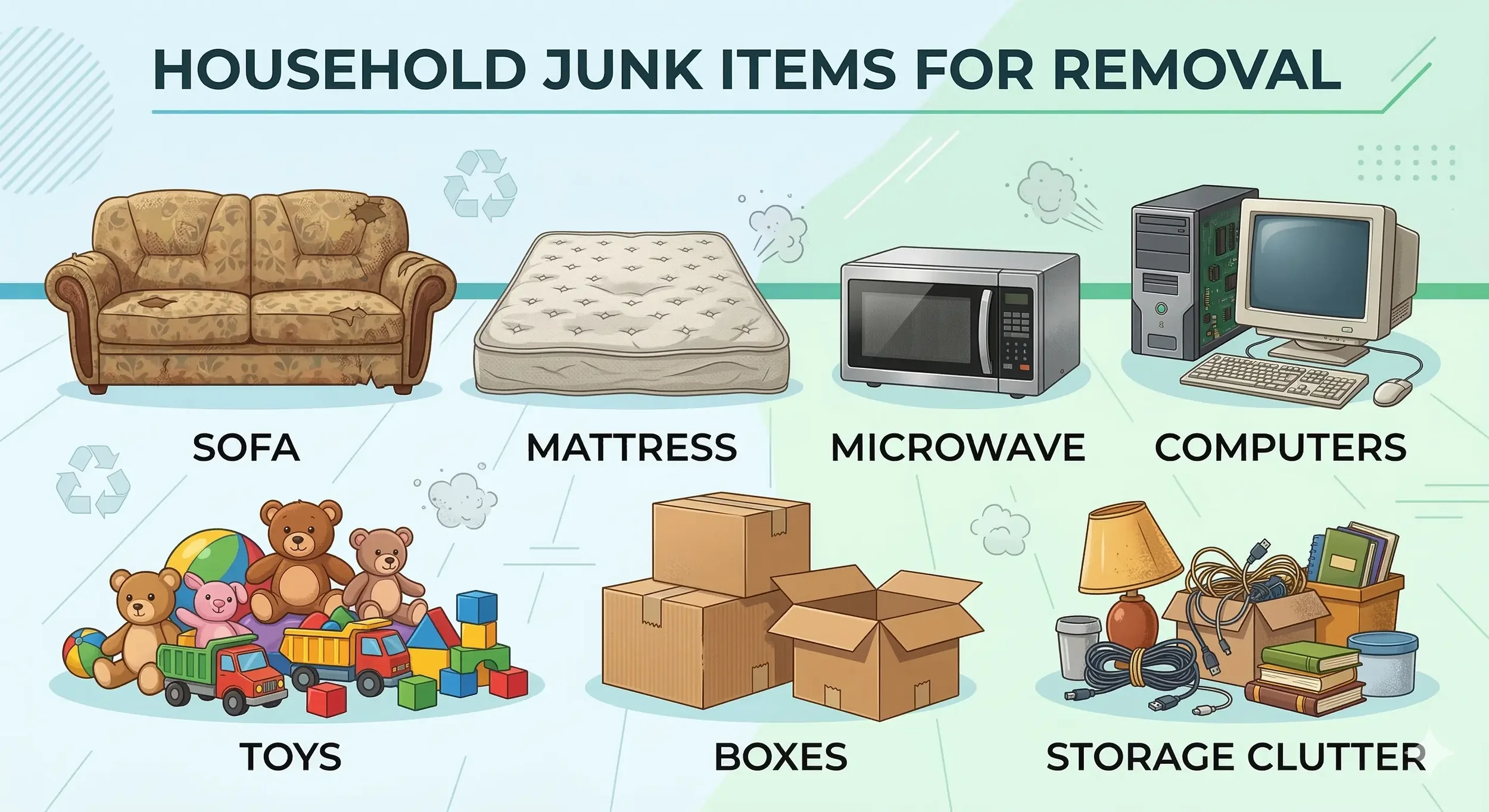
Clark’s Haul removes household junk and clutter across the Bay Area. Clark’s Haul household junk removal includes daily home items, broken furniture, and stored clutter. Crews load, haul, and sort items for reuse, recycling, or proper disposal under California waste rules.
Household junk and clutter we remove are listed below. Homes often produce 100–800 lb (45–363 kg) of loose junk per cleanout, based on room size, storage habits, and item weight. Local pickups across Contra Costa County provide real job data from garages, apartments, and family homes.
Old furniture – Sofas, chairs, dressers, and tables removed from homes during moves, upgrades, or room cleanouts. Bulky furniture often weighs 40–250 lb (18–113 kg) depending on material and frame type.
Broken appliances – Small household appliances like microwaves, fans, or coffee makers removed safely. Many units contain metal parts that recycling centers recover under California recycling programs.
General household clutter – Boxes, toys, books, clothing piles, and unused storage items cleared from bedrooms, closets, or hallways. These items often fill 3–10 large bins per home cleanout.
Garage junk and storage overflow – Old tools, plastic bins, sports gear, and forgotten equipment commonly found in garages. Garages typically produce 200–1,000 lb (90–454 kg) of junk during full cleanouts.
Mattresses and box springs – Used mattresses, bed frames, and box springs removed during home upgrades. California law requires mattress recycling through approved facilities [CalRecycle].
Household electronics – TVs, monitors, printers, and small devices removed following electronic waste (e-waste) disposal guidelines set by state recycling programs [EPA].
For larger storage cleanouts, many homeowners schedule residential junk removal services when garages and storage areas are heavily cluttered. Field teams regularly remove these items in Walnut Creek, Concord, and Martinez, based on recent Bay Area hauling jobs.
What Furniture and Mattresses Does Clark's Haul Accept?
Clark’s Haul accepts most furniture and mattresses in the Bay Area.Clark’s Haul furniture removal includes sofas, beds, tables, and mattresses from homes, apartments, and offices. Crews lift, load, and haul bulky items safely using trained two-person teams and standard hauling trucks.
Furniture and mattresses that Clark's Haul accepts are listed below. Most furniture pieces weigh 30–300 lb (14–136 kg) depending on material, frame type, and size. Mattresses follow California mattress recycling rules and disposal programs approved by CalRecycle [CalRecycle].
Furniture pickups often occur during moves, remodels, or estate cleanouts. Local hauling data from Walnut Creek and Concord homes confirms that sofas and mattresses are the most removed items. For bulky furniture pickups during moves or remodels, many customers scheduleprofessional furniture removal services to handle heavy lifting safely.
Sofas and couches – Sectional sofas, loveseats, and reclining couches removed from living rooms or apartments. Large sectionals often weigh 150–300 lb (68–136 kg), depending on frame and cushions.
Beds and bed frames – Wooden or metal bed frames, headboards, and platform beds removed during bedroom upgrades or moving cleanouts. Frames range 40 to 150 lb (18 to 68 kg) by material.
Mattresses and box springs – Twin, full, queen, and king mattresses removed safely. California requires mattress recycling through approved facilities under the Mattress Recycling Council program [CalRecycle].
Dressers and wardrobes – Bedroom storage units such as dressers, armoires, and wardrobes hauled from homes and apartments. Solid wood units often weigh 80–250 lb (36–113 kg).
Tables and desks – Dining tables, office desks, coffee tables, and work tables removed from homes or small offices. Table weight ranges from 30 to 180 lb (14–82 kg) depending on the material.
Chairs and recliners – Dining chairs, office chairs, and recliners removed in small or large batches. Recliners typically weigh 60–120 lb (27–54 kg) due to internal metal frames.

What Appliances Does Clark's Haul Away?
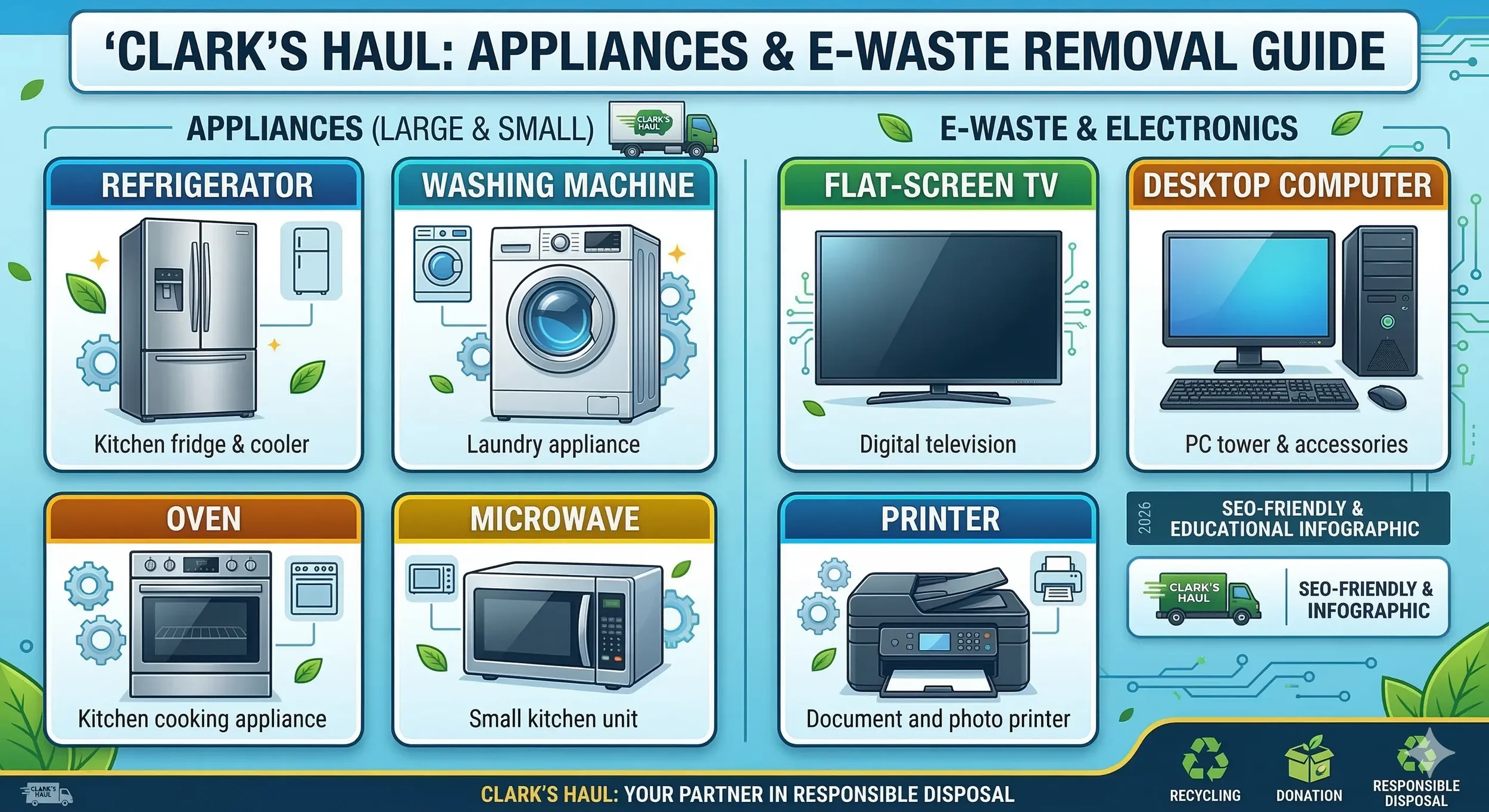
Clark’s Haul hauls away many household appliances in the Bay Area.Clark’s Haul appliance removal includes large kitchen units and small home machines. The team lifts, loads, and hauls appliances for safe recycling or disposal under California appliance recycling rules.
Most appliances weigh 40–350 lb (18–159 kg) depending on size, motor parts, and metal frames. Items with refrigerants follow EPA disposal rules and certified recycling programs [EPA]. Local hauling jobs across Contra Costa County confirm refrigerators and washers are the most common removals.
Appliances Clark's Haul hauls away are listed below.
Refrigerators and freezers – Large kitchen cooling units removed from homes and apartments. Units often weigh 200–350 lb (90–159 kg) due to compressors and insulated metal panels.
Washing machines and dryers – Laundry appliances removed during home upgrades or replacements. Each unit usually weighs 120–220 lb (54–100 kg), depending on drum size and motor type.
Ovens and kitchen ranges – Gas or electric cooking ranges hauled from kitchens or remodel projects. Standard ranges weigh 130–200 lb (59–91 kg) based on material and burner design.
Dishwashers and compact kitchen units – Built-in or portable dishwashers removed during kitchen upgrades. Units often weigh 70–120 lb (32–54 kg), depending on stainless steel parts.
Microwaves and small appliances – Countertop microwaves, toaster ovens, and similar units removed with household junk loads. These smaller appliances usually weigh 10–40 lb (4–18 kg).
Air conditioners and cooling units – Window air conditioners and portable cooling machines were hauled safely. Units range 40–120 lb (18–54 kg) and require proper refrigerant handling [EPA].
For full appliance hauling details, visit the page coveringlarge appliance and debris removal services. Recent hauling jobs in Walnut Creek and Concord provide field examples of common appliance pickups.
What Electronics and E-Waste Does Clark's Haul Recycle?
Clark’s Haul recycles electronics and e-waste in the Bay Area.Clark’s Haul e-waste recycling includes common home electronics and office devices. Crews collect, transport, and deliver items to certified California electronic waste recycling facilities under state regulations.
Electronic waste (E-waste) includes devices with circuit boards, screens, or batteries. Many electronics weigh 2–80 lb (1–36 kg) depending on screen size and internal components. California requires proper e-waste recycling through approved collectors to prevent landfill contamination [CalRecycle] [EPA].
Electronics and e-waste we recycle are listed below. Many removals come from home offices, garage cleanouts, and business upgrades across Contra Costa County. For larger pickups, see the electronics removal service page.
Televisions and flat-screen displays – LCD, LED, and older plasma televisions removed from homes or offices. Screen sizes range 24–75 inches (61–191 cm) and require certified recycling.
Computer monitors and desktops – Desktop computers, towers, and external monitors removed during office upgrades or home office cleanouts. Units weigh 10–40 lb (4–18 kg) depending on components.
Laptops and small computing devices – Laptops, tablets, and similar devices collected for safe electronic recycling. Many units contain lithium batteries requiring proper disposal procedures.
Printers and office electronics – Inkjet printers, laser printers, scanners, and fax machines removed from home offices or workplaces. Office printers often weigh 15–60 lb (7–27 kg).
Networking equipment and accessories – Routers, modems, cable boxes, and external drives collected during technology upgrades. These devices contain recyclable circuit boards and metals.
Audio and video equipment – DVD players, speakers, stereo systems, and media receivers removed during entertainment system upgrades. Most units weigh 5–50 lb (2–23 kg) depending on design.
What Yard Waste and Garden Debris Can Clark's Haul Take?
Clark’s Haul takes yard waste and garden debris across the Bay Area.Clark’s Haul yard waste removal includes branches, leaves, soil, and landscaping debris from homes and properties. Crews load organic waste and deliver it to approved California green-waste recycling facilities.
Most yard debris weighs 50–1,200 lb (23–544 kg) depending on plant type, moisture level, and soil content. Tree limbs and soil loads increase total weight. Disposal follows California organic waste recycling rules under state waste programs [CalRecycle].
Yard waste and garden debris we take are listed below. Many pickups occur after storm cleanup, seasonal trimming, or landscaping projects across Contra Costa County. For larger cleanups, see the yard waste removal service page.
Tree branches and trimmed limbs – Fresh or dried tree branches removed after pruning or storm cleanup. Branch loads often weigh 100–800 lb (45–363 kg) depending on tree size and wood density.
Leaves and organic yard debris – Bagged or loose leaves collected from lawns and gardens during seasonal cleanup. Leaf piles may fill 5–20 yard bags, depending on yard size.
Grass clippings and hedge trimmings – Lawn clippings, shrub cuttings, and hedge trimmings removed after routine yard maintenance. Moist grass loads can weigh 50–300 lb (23–136 kg).
Garden plants and root balls – Dead plants, shrubs, and root balls removed during landscaping updates. Root balls often weigh 40–150 lb (18–68 kg) due to soil content.
Soil, dirt, and small landscaping debris – Loose soil, mulch, and small rocks hauled from garden renovations. Soil loads may reach 200–1,000 lb (91–454 kg) depending on volume.
Old fencing and yard materials – Wooden fence panels, garden edging, and outdoor yard materials removed after yard upgrades or repairs. Fence panels often weigh 20–80 lb (9–36 kg).
What Construction Debris and Cleanouts Does Clark's Haul Handle?
Clark’s Haul handles construction debris and cleanouts in the Bay Area.Clark’s Haul construction debris removal includes wood, drywall, flooring, and renovation waste from homes and small job sites. Crews collect, load, and haul debris to approved California recycling and disposal facilities.
Most construction debris loads range 200–2,500 lb (91–1,134 kg), depending on material density, renovation size, and demolition stage. Wood, drywall, and tile often form mixed debris loads. Disposal follows California construction waste recycling guidelines [CalRecycle].
The construction debris and cleanouts we handle are listed below. Many removals follow kitchen remodels, bathroom upgrades, and small demolition jobs across Contra Costa County. For renovation, cleanup, and remodeling waste, exploreconstruction debris removal options available for Bay Area projects.
Wood and lumber scraps – Framing lumber, plywood sheets, and broken boards removed after renovation or demolition work. Wood debris piles often weigh 100–800 lb (45–363 kg) depending on volume.
Drywall and plaster debris – Broken drywall sheets, plaster panels, and wall demolition debris collected during remodeling projects. Drywall waste typically ranges 50–500 lb (23–227 kg).
Tile, flooring, and carpet materials – Old tile, laminate flooring, hardwood planks, and carpet removed during flooring upgrades. Flooring debris loads often reach 100–700 lb (45–318 kg).
Cabinets and renovation fixtures – Kitchen cabinets, bathroom vanities, and built-in fixtures removed during remodels. Cabinet sets often weigh 80–300 lb (36–136 kg) depending on wood type.
Concrete chunks and masonry debris – Small concrete slabs, bricks, and masonry pieces removed from patios or walkways. Dense materials may weigh 300–1,500 lb (136–680 kg).
General demolition debris – Mixed materials from renovation cleanouts, including insulation, trim, and construction leftovers. Mixed debris loads often range 200–1,200 lb (91–544 kg).
What Items Can Clark's Haul Not Take in the Bay Area?
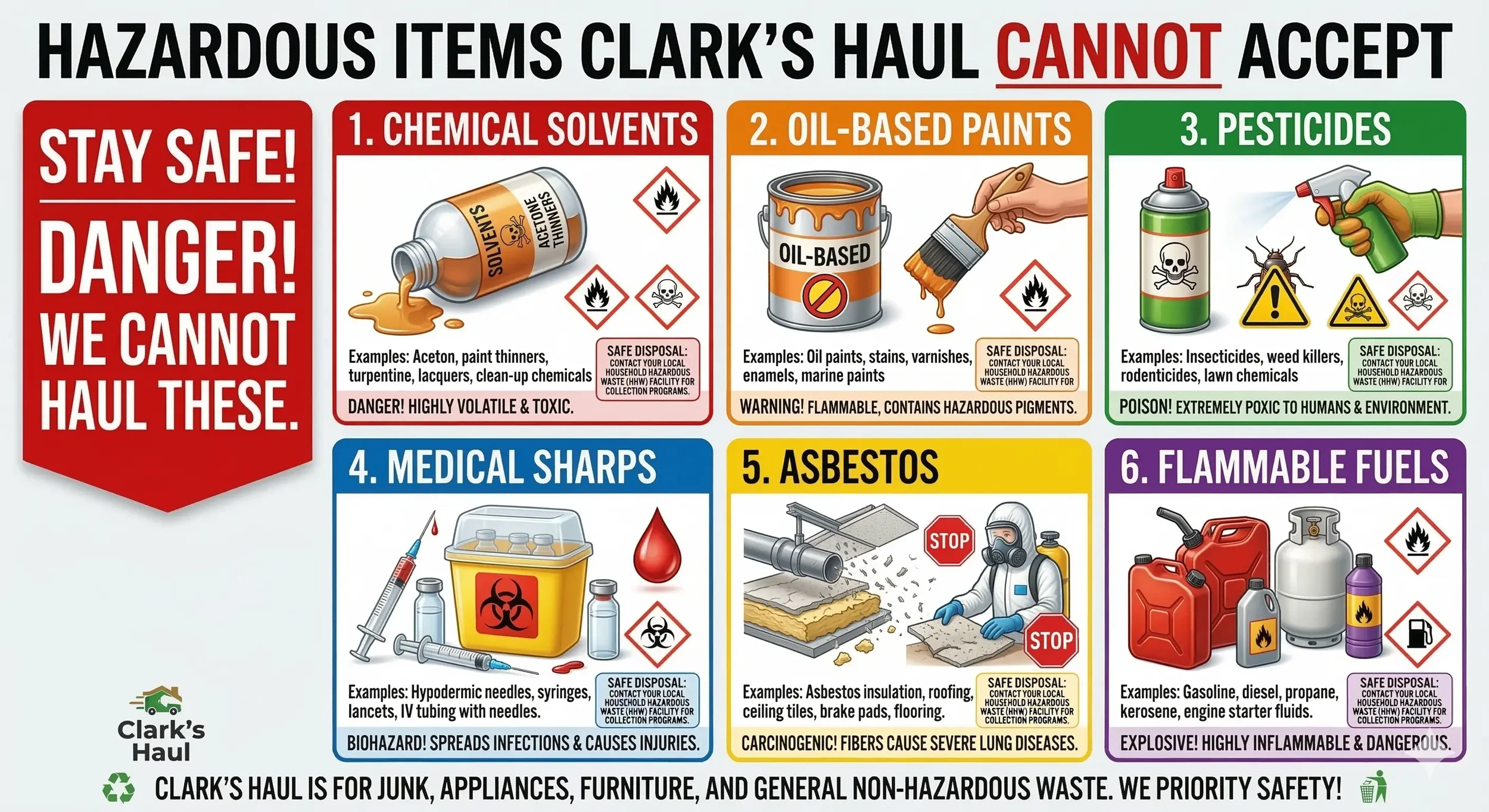
Items that Clark’s Haul cannot take in the Bay Area include hazardous, restricted, and regulated materials.Clark’s Haul prohibited items in the Bay Area include chemicals, medical waste, and explosive materials restricted by California waste disposal laws and local environmental safety rules.
Certain items require licensed hazardous handling or specialized disposal facilities. Materials such as chemicals, fuel containers, and medical waste follow California hazardous waste regulations managed by the Department of Toxic Substances Control (DTSC) [EPA] [DTSC].
Items Clark's Haul cannot take are listed below. These restrictions protect crews, public safety, and environmental compliance across Contra Costa County and surrounding Bay Area cities. For standard removal options, see the junk removal services page.
Common restricted items include:
Hazardous chemicals – Paint thinner, pesticides, solvents, and industrial chemicals that require certified hazardous waste disposal facilities.
Medical or biohazard waste – Needles, biological waste, and clinical materials are regulated under medical waste safety laws.
Flammable fuels and explosives – Gasoline, propane tanks, fireworks, and explosive materials are restricted by state transportation safety rules.
Asbestos-containing materials – Insulation, ceiling tiles, or construction products containing asbestos require licensed asbestos removal contractors.
Radioactive or controlled substances – Materials regulated under federal and state hazardous substance laws requiring certified handling agencies.
Local disposal rules may vary by city, recycling programs, and hazardous waste collection events across the Bay Area. Field experience from regional junk removal jobs confirms that hazardous materials require certified disposal partners for safe processing.
What Hazardous Materials Cannot Clark's Haul Remove?
Clark’s Haul cannot remove hazardous materials in the Bay Area.Clark’s Haul hazardous material restrictions include chemicals, medical waste, and flammable substances regulated by California hazardous waste laws. These materials require certified handling under state and federal safety standards.
Hazardous materials pose safety and environmental risks during transport and disposal. Many substances require licensed disposal through California Department of Toxic Substances Control (DTSC) facilities and approved hazardous waste programs [EPA] [DTSC].
Hazardous materials Clark's Haul cannot remove are listed below. Local hauling crews follow strict compliance rules across Contra Costa County and Bay Area cities. For approved removal items, visit the junk removal services page.
Chemical solvents and industrial cleaners – Paint thinners, degreasers, and strong solvents requiring hazardous waste facilities. These chemicals often contain toxic compounds regulated by environmental safety agencies.
Pesticides and agricultural chemicals – Weed killers, insecticides, and garden pesticides requiring controlled disposal programs. Many contain hazardous ingredients regulated under California environmental protection rules.
Medical waste and biohazard materials – Needles, sharps containers, biological waste, and medical testing materials requiring licensed medical waste processing facilities.
Flammable fuels and fuel containers – Gasoline, kerosene, diesel containers, and similar fuel products posing fire and transport risks under hazardous material regulations.
Pressurized tanks and propane cylinders – Propane tanks, compressed gas containers, and industrial cylinders requiring specialized disposal and certified gas handling procedures.
Toxic automotive chemicals – Motor oil, transmission fluid, antifreeze, and similar automotive liquids requiring approved hazardous recycling programs [EPA].
What Paints, Solvents, and Chemicals Are Prohibited by Clark's Haul?
Clark’s Haul does not remove paints, solvents, or hazardous chemicals in the Bay Area.Clark’s Haul prohibited paints, solvents, and chemicals include toxic liquids and industrial cleaners restricted by California hazardous waste disposal laws and environmental safety regulations.
These materials require certified hazardous waste processing through California Department of Toxic Substances Control (DTSC) programs. Liquid chemicals often weigh 5–50 lb (2–23 kg) per container and pose environmental risks if transported without proper permits [EPA] [DTSC].
Paints, solvents, and chemicals prohibited by Clark's Haul are listed below. Many homes and garages store these materials after renovation or automotive work across Contra Costa County. For approved junk types, see the junk removal services page.
Oil-based paints and paint thinners – Oil paints, lacquer thinners, and industrial coatings contain flammable chemicals requiring certified hazardous waste disposal facilities.
Chemical solvents and degreasers – Automotive solvents, metal cleaners, and degreasing agents used in workshops contain toxic compounds requiring regulated disposal programs.
Pesticides and garden chemicals – Weed killers, insecticides, and lawn treatment chemicals contain hazardous ingredients restricted under California environmental safety regulations.
Industrial adhesives and sealants – Construction adhesives, epoxy resins, and chemical bonding agents often contain volatile compounds requiring specialized hazardous disposal.
Paint strippers and varnish removers – Strong chemical strippers used during furniture refinishing contain solvents that require controlled hazardous waste handling.
Unknown or unlabeled chemical containers – Containers without safety labels or chemical identification cannot be transported and must be inspected by hazardous waste authorities.
What Asbestos, Biohazards, and Medical Waste Does Clark's Haul Decline?
Clark’s Haul declines asbestos, biohazards, and medical waste in the Bay Area.Clark’s Haul asbestos and biohazard restrictions include regulated materials that require licensed hazardous handling and controlled disposal. These materials follow strict California health and environmental safety laws.
Asbestos fibers and medical waste pose serious health risks during handling and transport. These materials require licensed removal through the California Department of Toxic Substances Control (DTSC) and medical waste facilities [EPA] [DTSC].
Asbestos, biohazards, and medical waste we decline are listed below. Local hauling crews follow strict compliance across Contra Costa County and Bay Area cities. For standard junk removal options, visit the junk removal services page.
Asbestos insulation and building materials – Insulation, ceiling tiles, and pipe wraps containing asbestos fibers require licensed asbestos abatement contractors for safe removal.
Medical sharps and needle waste – Used needles, lancets, and sharps containers require controlled disposal through certified medical waste collection facilities.
Biological and clinical waste – Blood-contaminated materials, laboratory waste, and medical testing supplies require specialized biohazard disposal procedures.
Hospital and healthcare waste – Medical gloves, contaminated protective equipment, and clinical disposables require licensed healthcare waste management programs.
Animal biological waste – Veterinary clinic waste, animal tissue samples, and laboratory specimens require regulated biological waste disposal services.
Contaminated medical equipment – Used surgical tools, contaminated diagnostic equipment, and similar medical items require professional biohazard decontamination and disposal.
Why Are Certain Items Rejected by Clark's Haul?
Certain items are rejected by Clark’s Haul because safety laws, disposal rules, and company policies restrict hazardous transport. Clark’s Haul item rejection policy follows California environmental regulations and hauling safety standards to protect workers, customers, and waste facilities across the Bay Area.
Hazardous substances require licensed handling under California Department of Toxic Substances Control (DTSC) programs and federal environmental safety rules [EPA] [DTSC]. Materials such as chemicals, fuels, and biohazards create transport risks during junk hauling operations.
Some items exceed safe hauling conditions or disposal limits at local recycling and landfill facilities. Certain hazardous materials also require certified containment or treatment processes that standard junk hauling trucks cannot provide.
Local hauling experience across Contra Costa County, Walnut Creek, and Concord confirms that regulated materials must be processed by specialized disposal providers. For a breakdown of materials that hauling crews can safely collect, visit thecomplete junk removal services overview.
What Should You Do When Clark's Haul Cannot Take Your Items?
When Clark’s Haul cannot take your items, you should use licensed disposal programs, recycling centers, or hazardous waste collection services. Clark’s Haul rejected item alternatives include certified recycling facilities and local hazardous waste programs approved by California environmental authorities.
Many restricted materials require special processing under California Department of Toxic Substances Control (DTSC) regulations and approved disposal facilities [EPA] [DTSC]. These programs handle hazardous liquids, chemicals, and medical waste that standard junk hauling trucks cannot transport.
Local disposal programs operate across Contra Costa County and Bay Area cities, often through scheduled hazardous waste collection events. Some facilities accept 5–50 lb (2–23 kg) containers of regulated materials depending on safety guidelines and facility capacity.
What to do when Clark's Haul cannot take your items is outlined below.
Use local hazardous waste collection programs – County programs safely process chemicals, paints, and solvents under environmental safety regulations.
Visit approved e-waste recycling centers – Certified electronic waste facilities process TVs, computers, and devices under California electronic recycling laws.
Contact licensed hazardous disposal contractors – Specialized companies handle asbestos, biohazards, and regulated industrial materials requiring trained removal crews.
Check city recycling or disposal programs – Local municipal recycling centers often accept restricted materials during scheduled collection events.
Review accepted junk removal options – For approved household items and normal hauling requests, you canschedule a junk pickup online.
Field experience from local Bay Area hauling projects shows that combining county disposal programs and recycling facilities provides the safest solution for restricted materials.
Should You Use Specialized Hazardous Waste Services for Items Clark's Haul Rejects?
Yes, you should use specialized hazardous waste services for items Clark’s Haul rejects.Specialized hazardous waste services handle chemicals, biohazards, and regulated materials that standard junk hauling companies cannot transport safely or legally in California.
These services follow strict California Department of Toxic Substances Control (DTSC) and Environmental Protection Agency (EPA) safety standards for hazardous waste transport and disposal [EPA] [DTSC]. Many hazardous materials require sealed containers and controlled handling during removal.
Hazardous waste loads often range 5–500 lb (2–227 kg) depending on chemical type, container size, and safety requirements. Licensed contractors use certified trucks and trained crews to prevent environmental contamination.
When to use specialized hazardous waste services is explained below.
Dispose of chemical paints and solvents – Use hazardous waste contractors when storing paint thinners, solvents, or industrial coatings requiring licensed disposal facilities.
Handle medical waste and biohazards – Contact certified medical waste services for needles, sharps containers, or biological materials requiring controlled disposal.
Remove asbestos-containing construction materials – Hire licensed asbestos abatement specialists when insulation, ceiling tiles, or pipe wraps contain asbestos fibers.
Dispose of fuel containers and flammable liquids – Licensed hazardous waste services safely transport gasoline, diesel, and similar fuels under regulated transport conditions.
Recycle toxic automotive chemicals – Use approved recycling programs for motor oil, antifreeze, and transmission fluids that require certified chemical-processing facilities.
Manage unknown or unlabeled chemical containers – Hazardous waste specialists inspect and safely remove containers with unknown chemical contents or missing safety labels.
Local waste professionals across Contra Costa County and the Bay Area regularly recommend specialized disposal partners for regulated materials that junk-hauling companies cannot accept.
How Do Bay Area Municipal Programs Help with Items Not Taken by Clark's Haul?
Bay Area municipal programs help dispose of items not taken by Clark’s Haul.Bay Area municipal waste programs provide safe disposal for hazardous materials, e-waste, and regulated items rejected by standard junk hauling services. These programs follow California environmental disposal regulations.
Most cities offer scheduled drop-off services through household hazardous waste (HHW) programs and recycling facilities. These programs often accept 5–50 lb (2–23 kg) containers of chemicals, electronics, or automotive fluids per visit [EPA] [CalRecycle].
Bay Area municipal programs that help with rejected items are listed below. Local case data from Contra Costa County recycling services confirms that city programs handle many regulated materials safely.
Household Hazardous Waste (HHW) collection programs – County HHW facilities accept paints, pesticides, and chemicals during scheduled drop-off appointments for residents.
City electronic waste recycling centers – Municipal recycling facilities collect TVs, computers, and monitors following California electronic waste recycling regulations.
County recycling and transfer stations – Local waste stations process appliances, scrap metal, and bulky materials that standard junk hauling trucks cannot transport.
Community hazardous waste collection events – Seasonal city events allow residents to safely dispose of chemicals, fuels, and automotive liquids.
Automotive fluid recycling programs – Municipal programs collect motor oil, antifreeze, and similar automotive liquids at approved recycling locations.
Local landfill hazardous material drop-off sites – Certain landfill facilities provide regulated disposal areas for restricted materials following environmental safety guidelines.
For common removable items, visit the junk removal services page to schedule a standard pickup.
What Preparation Tips Avoid Rejection by Clark's Haul?
Preparation tips help avoid rejection by Clark’s Haul during junk removal pickups.Clark’s Haul preparation tips include sorting items, removing hazardous materials, and confirming accepted junk types before scheduling a pickup. Proper preparation improves pickup speed and prevents service delays across Bay Area homes.
Most residential junk loads range 100–1,500 lb (45–680 kg), depending on furniture size, household clutter volume, and construction debris weight. Separating restricted materials helps crews load faster and follow California disposal regulations [CalRecycle].
Preparation tips to avoid rejection by Clark's Haul are given below.
Separate hazardous materials before pickup – Remove paints, solvents, chemicals, and fuels from junk piles because hazardous waste cannot travel in hauling trucks.
Group accepted junk items together – Place furniture, appliances, and household clutter in one visible location to help crews identify removable items quickly.
Check restricted item lists before scheduling – Review the junk removal services page to confirm which materials Clark’s Haul accepts or declines.
Drain liquids from appliances or containers – Appliances containing oils or liquids require draining to prevent spills during loading and transportation.
Label unusual or questionable items clearly – Mark items that may contain chemicals or batteries so crews can inspect them before loading.
Keep access paths clear for safe hauling – Clear driveways, hallways, and yard paths so hauling teams can remove heavy items safely and efficiently.