
Bay Area Spring Cleaning Junk Removal: Plan, Declutter, Donate
Spring cleaning in the Bay Area is more than a seasonal reset. It is a structured opportunity to reclaim space, reduce clutter, and responsibly dispose of items that no longer serve a purpose. This guide covers planning, decluttering, donating, and professional junk removal from start to finish.
Why Is Spring Cleaning Essential for Bay Area Homes?
Bay Area homes face specific clutter pressures. High housing costs mean many residents live in smaller spaces, condos, townhomes, and compact single-family homes, where accumulated items quickly reduce livable square footage. A structured annual spring clean directly addresses this.
Clutter reduction improves productivity. A 2011 study published in the Journal of Neuroscience found that physical clutter competes for attention and reduces the brain's ability to focus. Removing excess items from living and working spaces produces measurable improvements in concentration and task completion.
Spring cleaning supports physical health. Dust mites, mold spores, and allergens accumulate in stored clutter. The Bay Area's mild, humid climate, particularly in coastal cities like San Francisco, Daly City, and Richmond, creates favorable conditions for mold growth in undisturbed storage areas. Clearing and cleaning these spaces reduces allergen load.
Mental clarity improves with an organized space. Research published in Personality and Social Psychology Bulletin links cluttered home environments to elevated cortisol levels and chronic stress. Residents who complete a full spring clean report reduced anxiety and improved sleep quality.
Spring cleaning also creates a natural checkpoint for identifying items ready for donation, recycling, or junk removal before they accumulate further.
What Is the Best Way to Plan Your Bay Area Spring Cleaning?
Planning a successful spring clean requires a schedule, a priority list, and a clear system before a single item is moved. Unplanned cleanups stall quickly, produce incomplete results, and lead to burnout.
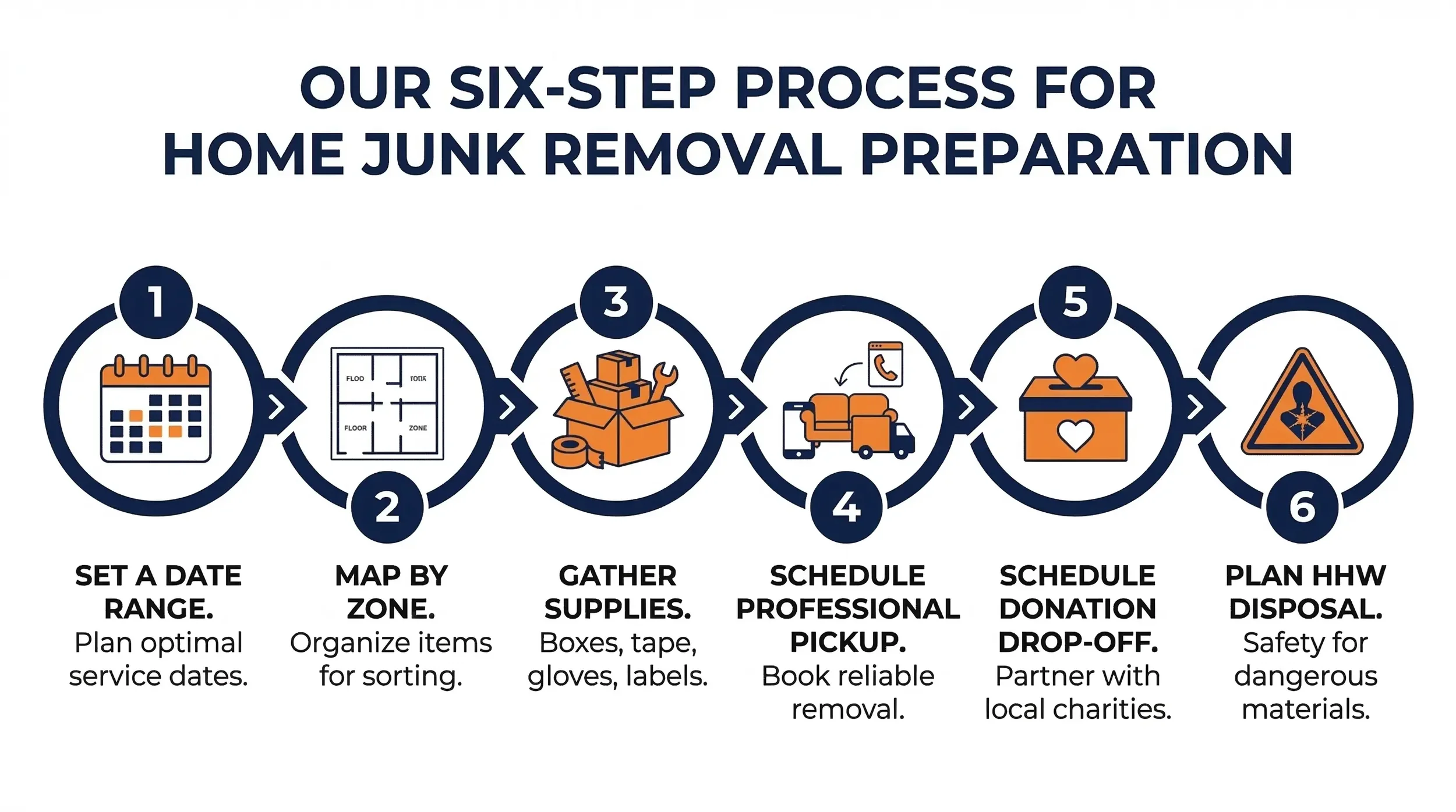
Step 1: Set a date range. Allocate 2 to 5 days, depending on the size of the property. A one-bedroom apartment requires 1 to 2 days. A 3-bedroom home requires 3 to 5 days. Spreading the work across a weekend or a long weekend prevents fatigue.
Step 2: Map the property by zone. Divide the home into zones: kitchen, living room, bedrooms, garage, storage areas, and outdoor spaces. Tackle one zone per session. Mixing zones leads to incomplete work and decision fatigue.
Step 3: Gather supplies before starting. Large trash bags, cardboard boxes labeled Keep, Donate, and Discard, markers, and packing tape are needed before the first item is touched. Running out of supplies mid-session disrupts momentum.
Step 4: Identify items requiring professional handling. Large furniture, appliances, mattresses, and electronics cannot go in the standard trash. Flag these items during the planning phase and schedule a professional pickup in advance. Clark's Haul and Go offers same-day junk removal across the Bay Area for items that need immediate removal.
Step 5: Schedule donation drop-offs or pickups. Items going to Goodwill, Habitat for Humanity, or local Bay Area thrift organizations need a scheduled drop-off or pickup window. Confirm the donation center's accepted items list before loading the vehicle.
Step 6: Plan for disposal of hazardous materials. Paints, solvents, batteries, and fluorescent bulbs require a Household Hazardous Waste (HHW) facility drop-off. Contra Costa and Alameda County operate free HHW facilities open to residents.
Professional help makes the planning phase faster and execution more efficient, particularly for large-scale cleanouts, estate cleanups, or properties with multi-room accumulation.
How to Declutter Your Bay Area Home Effectively
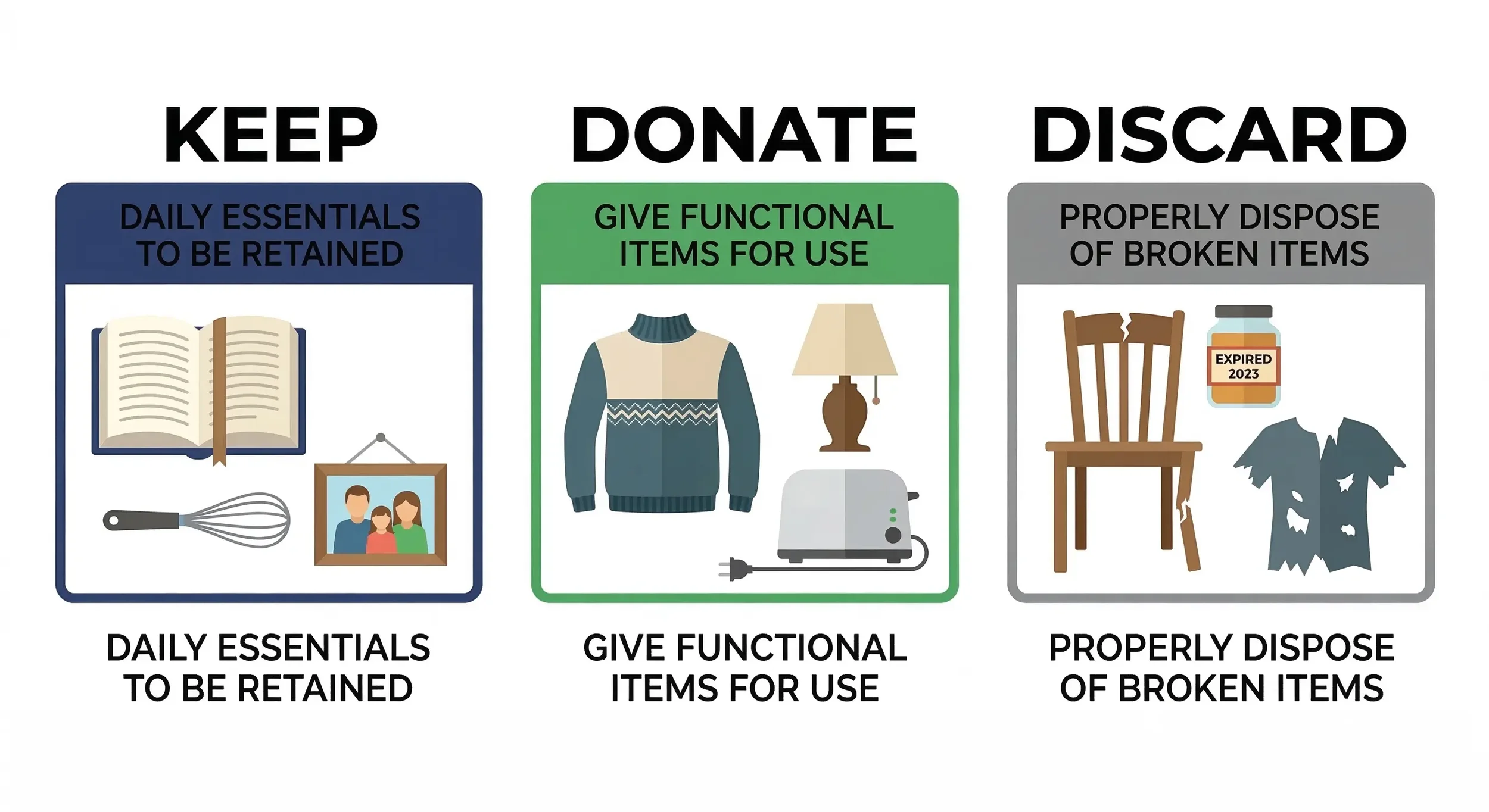
Effective decluttering follows a system, not a feeling. Decisions made on emotion slow the process and produce incomplete results. The most reliable method is the three-category sort applied to every item in a zone before moving to the next.
The three-category sort:
Keep items in active use within the past 12 months, items with a clear ongoing purpose, and sentimental items with designated storage space.
Donate items in functional condition that are no longer needed. Clothing, furniture, kitchen equipment, books, and working electronics qualify for most Bay Area donation centers.
Discard, broken, expired, or unsalvageable items. This category includes damaged furniture, expired medications, worn-out clothing, and non-functional electronics.
Room-by-room priorities for Bay Area homes:
Kitchen, expired pantry items, duplicate tools, appliances unused for 12 or more months, and worn cookware.
Bedroom, clothing not worn in 12 months, excess bedding, outdated electronics, and furniture that does not fit the current space.
Garage, tools with no current use, sports equipment no longer in rotation, holiday decorations exceeding available storage, and hazardous materials requiring HHW disposal.
Attic and storage, boxes unopened for 2 or more years are strong candidates for donation or discard without item-by-item review.
Family members should participate in rooms containing shared items. Decisions about shared possessions made by one person without input create conflict and delay. For large properties or time-constrained cleanups, a professional junk removal crew handles the physical labor of sorting and loading while the resident makes keep or discard decisions.
What Are the Benefits of Donating Items During Spring Cleaning?
Donating functional items during spring cleaning delivers environmental, financial, and social returns that disposal cannot match. Every item donated to a registered nonprofit avoids landfill, extends the item's useful life, and supports community programs funded by thrift store revenue.
Environmental impact of donation vs disposal:
A donated sofa reused for 5 additional years avoids the 90 kg of CO2 equivalent generated by manufacturing a new replacement sofa, according to the UK's Waste and Resources Action Programme (WRAP).
Textile waste accounts for approximately 11.3 million tons of landfill in the United States annually, per the EPA. Donating clothing directly reduces this figure.
Donated electronics, refurbished and resold, reduce demand for new device manufacturing, which is one of the most resource-intensive industrial processes per unit of output.
Financial benefit: Donations to registered 501(c)(3) organizations qualify for charitable deductions under IRS Publication 526 for residents who itemize deductions. Furniture, clothing, and electronics carry estimated fair market values that reduce taxable income.
Bay Area donation centers accepting spring cleaning items:
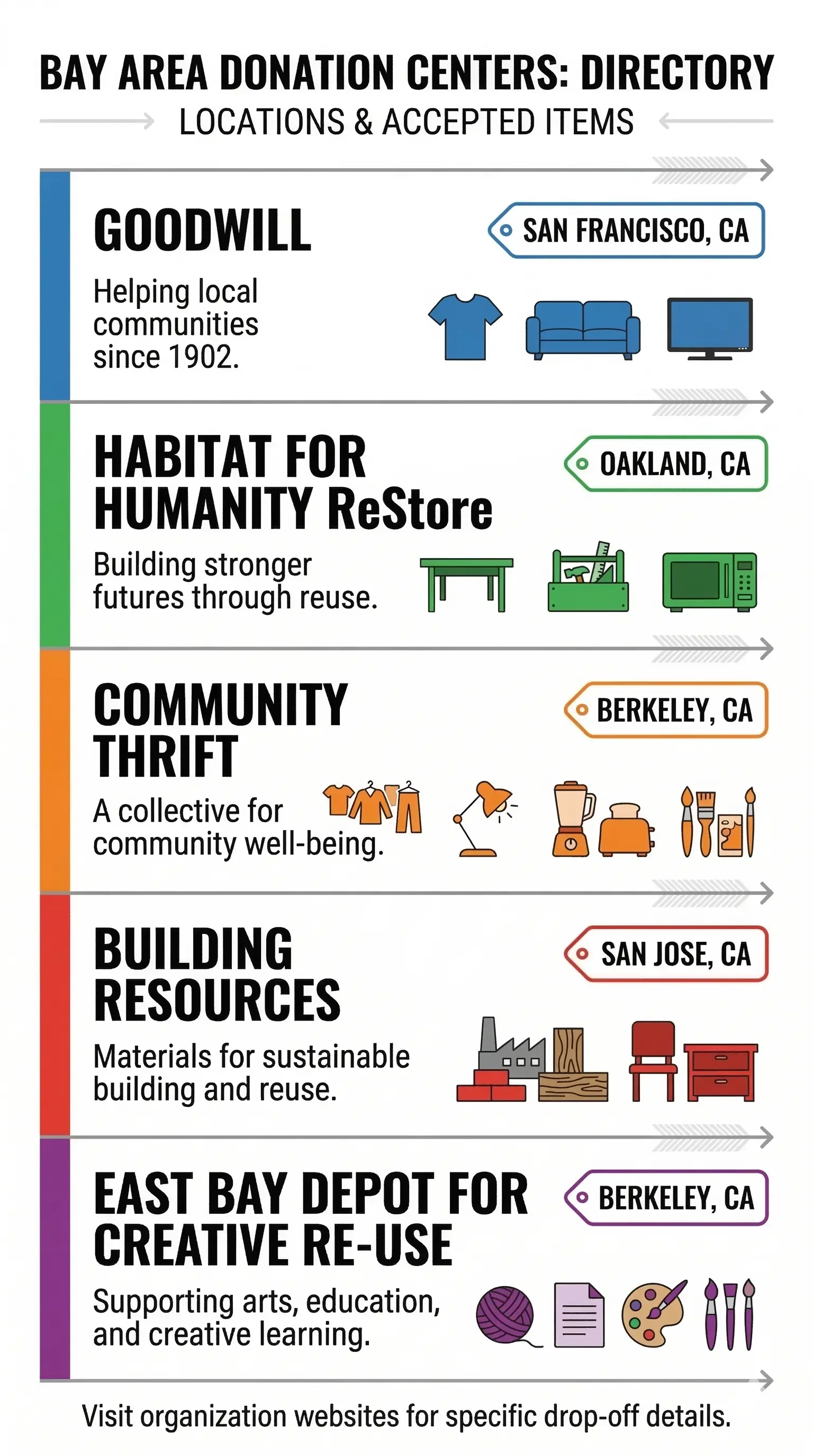
Goodwill of the San Francisco Bay Area accepts clothing, household goods, furniture, and small electronics at locations across San Francisco, Oakland, San Jose, and Contra Costa County.
Habitat for Humanity ReStore (Oakland and San Jose) accepts furniture, appliances, building materials, and home improvement items in good condition.
Community Thrift (San Francisco) accepts clothing, furniture, books, and household items. Proceeds support over 200 local nonprofits.
Building Resources (San Francisco) accepts building materials, hardware, and architectural salvage for resale to contractors and homeowners.
East Bay Depot for Creative Reuse (Oakland) accepts art supplies, office materials, and craft items for reuse in schools and community programs.
Clark's Haul and Go coordinates donation drop-offs for qualifying items collected during junk removal jobs, routing usable items directly to registered nonprofits before any landfill disposal is considered. For a full list of what junk removal crews accept, see theaccepted items junk removal guide.
How Does Spring Cleaning Help with Downsizing?
Spring cleaning provides the structured framework that makes downsizing achievable. Downsizing differs from regular decluttering in scope and permanence. It involves a deliberate, lasting reduction in possessions, typically driven by a life transition such as retirement, a move to a smaller home, the loss of a family member, or a shift in living arrangement.
Common downsizing triggers in the Bay Area:
Transitioning from a house to a condo or apartment in a high-cost market
Seniors relocating to assisted living or moving in with family
Adult children clearing a family home after a parent's passing
Remote workers relocating out of the Bay Area and reducing possessions before the move
Challenges Bay Area homeowners face during downsizing:
Volume, homes occupied for 10 or more years accumulate substantial possessions. A full home downsize generates 2 to 5 truckloads of items requiring sorting, donation, and disposal.
Emotional difficulty, items tied to family history and memory are harder to release than functional objects. This slows the pace of decision-making significantly.
Time pressure, downsizing connected to a property sale or move-out deadline, creates urgency that a self-managed cleanup cannot always meet.
Physical limitations, seniors, and residents with mobility limitations cannot safely move furniture, appliances, and heavy boxes without assistance.
A professional downsizing coordinator or a junk removal service with estate cleanout experience addresses all four challenges. Clark's Haul and Go handles fullestate cleanouts across the Bay Area, including sorting, donation routing, recycling, and disposal in a single visit.
How Can Professional Junk Removal Services in the Bay Area Help with Spring Cleaning?
Professional junk removal services make spring cleaning more efficient by handling the physical labor, eco-sorting, and disposal logistics that slow a self-managed cleanup. Booking a professional crew for the removal phase frees the resident to focus on the keep or donate decisions that require personal judgment.
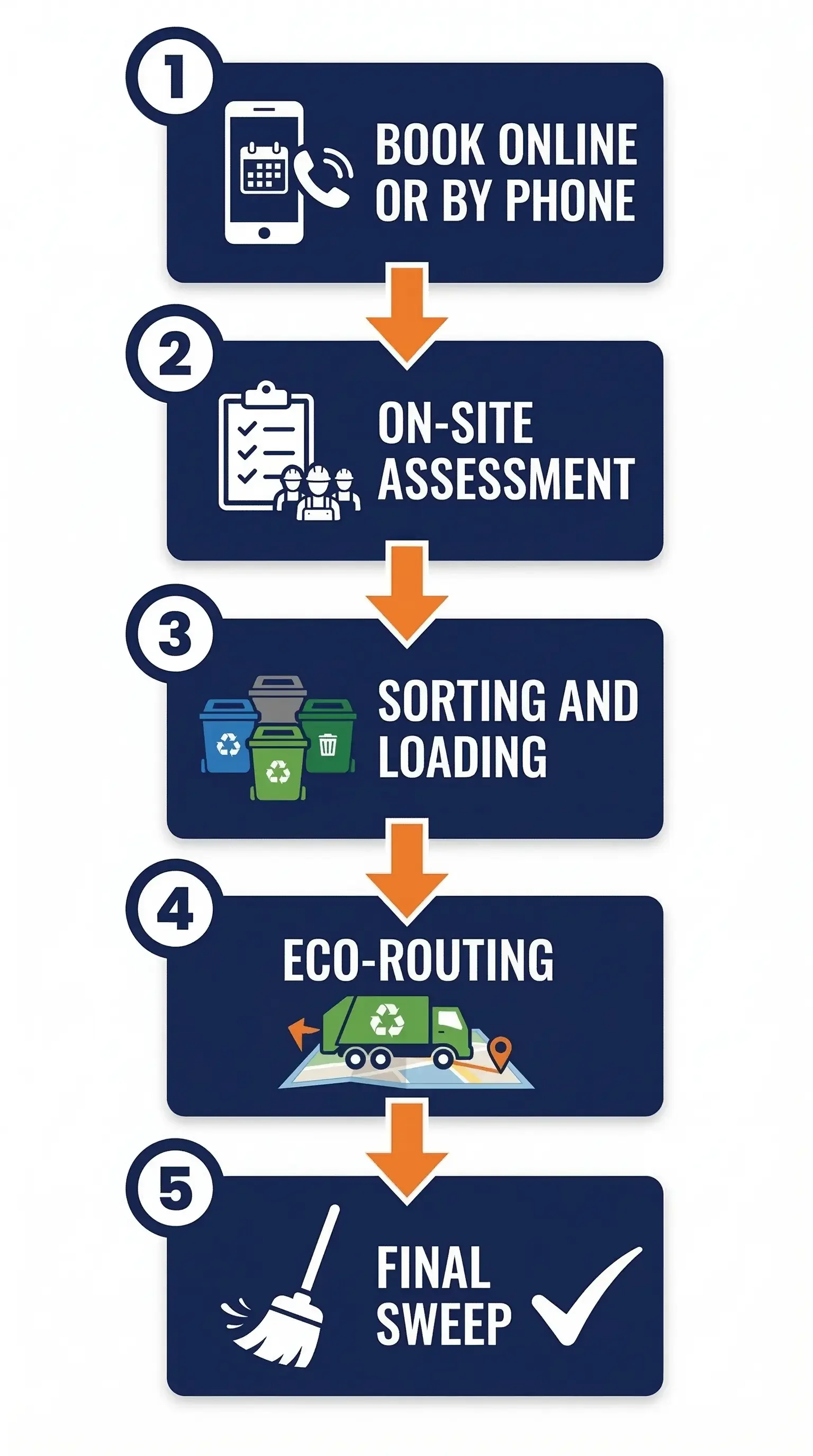
The junk removal process from booking to completion:
Book online or by phone. Clark's Haul and Go provides same-day appointments across the Bay Area. Booking takes under 5 minutes.
On-site assessment. The crew walks the property, confirms the item list, and provides a final price before any work begins.
Sorting and loading. Items are separated on site into donation, recycling, and landfill categories. No item is loaded without customer confirmation.
Eco-routing. Donations go to registered nonprofits. Recyclables go to certified facilities. Only unsalvageable waste goes to a landfill.
Final sweep. The crew clears the removal area and confirms the job is complete before leaving.
Cost factors for Bay Area junk removal:
Volume of items, measured in truck fractions from a minimum load to a full truck
Item type, heavy items like concrete, tile, and appliances carry higher rates than furniture and boxes
Access conditions, upper-floor units, narrow staircases, and long carry distances add time and cost
Location within the Bay Area, travel time from the crew base affects scheduling and same-day availability
For a full breakdown of pricing by load size and project type, see thejunk removal costs in Contra Costa County guide.
Why local companies outperform national chains:
Local Bay Area junk removal companies know local recycling facilities, donation centers, HHW drop-off requirements, and city-specific disposal rules. National franchise operators route waste to generic regional facilities without the local nonprofit and recycling relationships that a locally owned company maintains. Clark's Haul and Go beats any written estimate by 5% and operates across Contra Costa County, Alameda County, and Northern California.
What Are the Common Mistakes to Avoid During Spring Cleaning in the Bay Area?
Common spring cleaning mistakes create wasted effort, burnout, and incomplete results. Avoiding them keeps the process on schedule and on budget.
Starting without a system. Moving items from one room to another without a keep, donate, or discard decision produces the same clutter in a different location. Apply the three-category sort before any item is moved.
Tackling too much in one session. Attempting to clean the entire home in a single day leads to fatigue and poor decisions. Limit sessions to one zone per day.
Disposing of items that qualify for donation. Functional furniture, clothing, and electronics sent to the landfill represent a missed tax deduction and an unnecessary environmental cost.
Ignoring hazardous materials. Paints, batteries, fluorescent bulbs, and chemicals cannot go in standard trash. Set them aside for the HHW facility drop-off during the planning phase.
Underestimating the volume. Most residents underestimate how much junk accumulates over 12 months. Book aresidential junk removal service before the cleanup begins, rather than discovering mid-session that the load exceeds what a personal vehicle can handle.
Skipping the garage and storage areas. These zones contain the highest volume of discard-eligible items in most Bay Area homes and are the most frequently skipped during self-managed cleanups.

What Are the Benefits of Sustainable Spring Cleaning?
Sustainable spring cleaning reduces environmental impact at both the resident and community level. The practices are straightforward and apply to any Bay Area home regardless of size or budget.
Resident-side sustainable practices:
Replace single-use cleaning products with concentrated, refillable alternatives available at Berkeley Bowl, Rainbow Grocery, and major Bay Area natural food retailers.
Use reusable containers and boxes for sorting rather than single-use trash bags where possible.
Compost organic waste, food debris, and natural fiber textiles through local composting programs. San Francisco, Oakland, and many Contra Costa cities provide curbside composting as a standard utility service.
Repair items before discarding. Bay Area repair cafes operate in Oakland, Berkeley, San Francisco, and Palo Alto, offering free community repair sessions for electronics, clothing, and household goods.
Long-term environmental impact:
Sustainable spring cleaning practiced annually reduces household waste volume by an estimated 15 to 30% over a 5-year period, according to zero-waste advocacy data from the California Department of Resources Recycling and Recovery (CalRecycle). Reduced waste volume lowers disposal costs, decreases landfill contribution, and reduces demand for new manufactured goods.
Choosing a junk removal service that eco-sorts, donates, and recycles extends the environmental benefit of a sustainable spring clean beyond what a resident can achieve independently. For a full breakdown ofeco-friendly junk removal practices across the Bay Area, see our dedicated guide.

Conclusion: Make the Most of Your Bay Area Spring Cleaning
A successful Bay Area spring clean requires three things: a plan executed zone by zone, a consistent sorting system applied to every item, and responsible disposal through donation, recycling, and professional junk removal.
Planning prevents wasted effort. The three-category sort makes decluttering decisions faster and more consistent. Donating functional items to Bay Area nonprofits avoids landfill, supports the community, and generates a tax record. Professional junk removal handles the volume, physical labor, and eco-routing that self-managed cleanups cannot match.
For mattresses, electronics, and other items that require certified recycling, see the full guide on how torecycle mattresses and electronics across Contra Costa County.
Clark's Haul and Go provides same-day junk removal across the Bay Area with certified eco-sorting, donation routing, and a 5% price-beat guarantee. Book a free estimate today and clear your space in a single visit.
Clark's Haul and Go is a locally owned, fully insured junk removal company serving Contra Costa County, Alameda County, and Northern California. Contact Clark's at brandon@clarkshaulandgo.com or call +1 925-506-1387 for your free on-site estimate.